
English| EUR
Suggested for you
More currencies
Choose a language
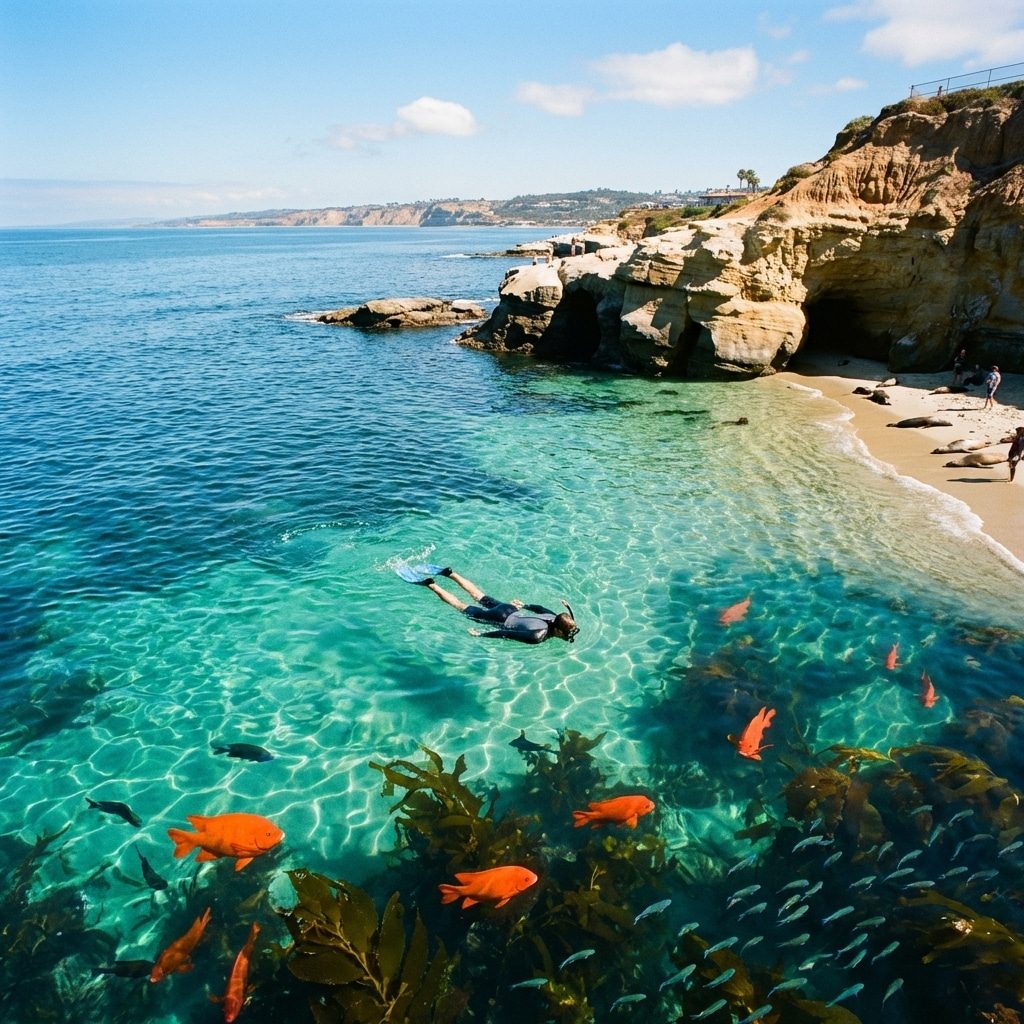
La Jolla Cove sits within the San Diego-La Jolla Underwater Park Ecological Reserve, a 6,000-acre protected marine area where garibaldi, leopard sharks, and sea lions share the kelp forest with snorkelers. The cove's sheltered position and rocky reef structure create calm conditions for surface observation, but successful snorkeling depends on understanding entry routes, tide cycles, and the reserve's seasonal patterns.
Quick answer
Snorkeling La Jolla Cove requires entering from the small beach at 1100 Coast Blvd during morning hours when visibility reaches 15-30 feet and currents remain minimal. Wade in from the sandy beach center, swim toward the kelp beds along the eastern rocks, and stay within the protected cove boundaries marked by buoys. Arrive between 7:00-10:00 AM for the calmest water before afternoon winds reduce clarity.
The garibaldi—California's official state marine fish—patrols the rocky substrate in numbers that surprise first-time snorkelers at La Jolla Cove. These bright orange damselfish guard nests year-round within the ecological reserve, joined by schools of señorita wrasse, blacksmith perch, and the occasional horn shark resting in crevices. The protected status prohibits fishing and collecting, which has allowed fish populations to recover to levels rarely seen along Southern California's developed coastline. How to snorkel La Jolla Cove begins with understanding the entry point. The main beach measures roughly 60 feet wide at low tide and narrows to half that during high tide. Enter from the center of the beach where sand extends farthest into the water, avoiding the slippery rocks on both flanks. The eastern side drops quickly into deeper water where the kelp forest begins—this is where leopard sharks congregate in summer months and where sea lions often approach snorkelers. The western boundary remains shallower and rockier, suitable for beginners who want to practice in waist-deep water before venturing out. Tide tables matter more than most visitors expect. Low tide exposes rocks that create easy exits but also concentrates wave energy into a smaller area. High tide provides deeper water at the entry point but covers the barnacle-encrusted rocks that serve as handholds. Mid-tide offers the best balance for underwater exploration in the reserve. Waves rarely exceed two feet inside the cove during calm conditions, but northwest swells in winter can wrap around the point and create surge even on apparently calm days. Check surf forecasts and arrive early when wind remains offshore. The water temperature ranges from 57°F in late winter to 70°F in early fall. Most snorkelers wear full wetsuits from November through May and shorty wetsuits or thick rash guards during summer. Several shops along Prospect Street rent gear, but many regular visitors bring their own masks and fins after discovering how often they return. Visibility varies from 5 feet during plankton blooms to 30 feet on the clearest autumn mornings. The reserve's protection ensures consistent marine life encounters regardless of clarity—garibaldi, sea hares, and bat rays appear even when the water turns green with algae.
“The protected status prohibits fishing and collecting, which has allowed fish populations to recover to levels rarely seen along Southern California's developed coastline.”
The best arrival window is 07:00–10:00, as morning provides the calmest water conditions and best visibility before afternoon winds. Selecting the right time involves balancing these daily patterns with seasonal swells that affect underwater clarity.
Warm air 75°F, water 70°F
Warmer water temperatures attract more marine life, though visibility can fluctuate.
Cooler air 64°F, water 58°F
Winter swells often reduce visibility and require caution; use gear suited for cooler temperatures.
Mild air 68°F, water 65°F
These transition months often offer the best balance of manageable crowds and clear water conditions.
—
Weekdays offer less foot traffic compared to weekends, ensuring more space for entry and exit at the water line.
Verdict: For optimal conditions, plan your visit during weekday mornings in September or October when the water is warm and afternoon winds are less frequent.
This procedure covers arriving at the cove, preparing your gear, and safely entering the protected marine reserve. The entire sequence takes 20–30 minutes from parking to being in the water.
Park in the neighborhood surrounding Coast Boulevard and walk down to the beach access at 1100 Coast Blvd. Morning conditions offer the calmest surf and clearest visibility before afternoon winds pick up.
Observe the water from the concrete steps leading to the beach—look for wave height, surge against the rocks, and visibility. If waves are breaking over the entry rocks or visibility is poor, return another day.
Lay out your mask, snorkel, and fins on the grassy area above the beach. Rinse your mask with fresh water from the shower, apply defogger, and secure all straps before descending the stairs.
Walk to the middle of the small beach where the sand meets the water, avoiding the rocks on either side. Wade in slowly, put your fins on in knee-deep water, and swim out toward the buoy line marking the reserve boundary.
The ecological reserve extends roughly 300 yards offshore, marked by yellow buoys. Remain inside this zone where sea lions, garibaldi, and leopard sharks are most concentrated, and avoid chasing or cornering any marine life.
La Jolla Cove is located at 1100 Coast Blvd, La Jolla, CA 92037. Visitors typically reach the site via private vehicle or public transit connecting to the La Jolla Village area.
Follow I-5 to La Jolla Village Drive, then exit toward Torrey Pines Road
MTS Route 30 to La Jolla Blvd & Silverado St
From La Jolla Village via Coast Boulevard
Parking near the coastline is limited and fills quickly. Utilize the street parking along Coast Boulevard or nearby residential areas, though arriving early is necessary to secure a spot close to the entrance.
La Jolla Cove is a public beach that remains open to visitors throughout the week. Access is available at all hours for those planning to snorkel.
La Jolla Cove sits within the San Diego-La Jolla Underwater Park Ecological Reserve, where state law protects all marine life. Violating these protections carries fines and damages the ecosystem that sustains the area's biodiversity.
Pack the right gear and prepare for marine conditions to make the most of your snorkeling session at the Cove.
Everything you need to know about how to snorkel la jolla cove
To learn how to snorkel La Jolla Cove, prioritize staying within the designated swimming areas and watching for changing tides. Wearing a personal flotation device is recommended, especially for those less experienced in open water swimming. Always keep an eye on your surroundings and stay clear of the rocky reef edges during low tide.
The best arrival window is 07:00–10:00. This morning period offers the calmest water conditions and optimal visibility before afternoon winds pick up, making it the preferred time for most visitors.
There is 0 USD entrance fee to the beach. Access to the shoreline remains free for all members of the public throughout the year.
The area is accessible daily from 00:00–23:59. While the beach is open at all hours, most visitors plan their excursions during daylight hours for safety and visibility.
When considering how to snorkel La Jolla Cove, bring high-quality snorkeling gear including a mask, snorkel, and fins. A wetsuit is also advisable to maintain body temperature in the Pacific Ocean, which can be cooler than expected even in summer. Bringing a towel and sunscreen is also essential for post-water comfort.
Yes, many visitors learn how to snorkel La Jolla Cove as their first open-water experience. By choosing calm morning hours and staying in shallow, sandy-bottom zones, beginners can observe leopard sharks and bright orange garibaldi fish with ease.
To simplify your planning, many visitors look for a professional La Jolla Cove tour to provide guided instruction and necessary equipment. Professional guides ensure you visit the best underwater spots while adhering to ecological preservation rules.
Essential items include a well-fitting mask and snorkel set, swimming fins for efficient movement, and a high-visibility floatation device. A full-length wetsuit is commonly used to protect against cold currents and marine abrasions, especially when exploring near the kelp forest habitats.
La Jolla Cove Snorkeling Conditions
Read more GuideSnorkeling with Leopard Sharks in La Jolla Cove
Read more GuideIs It Safe to Snorkel in La Jolla Cove?
Read more GuideSnorkeling at La Jolla Cove Underwater Park
Read more Tickets & toursGuided Snorkeling Tours in La Jolla Cove
Read more Tickets & toursSnorkel Gear Rentals in La Jolla Cove
Read more